
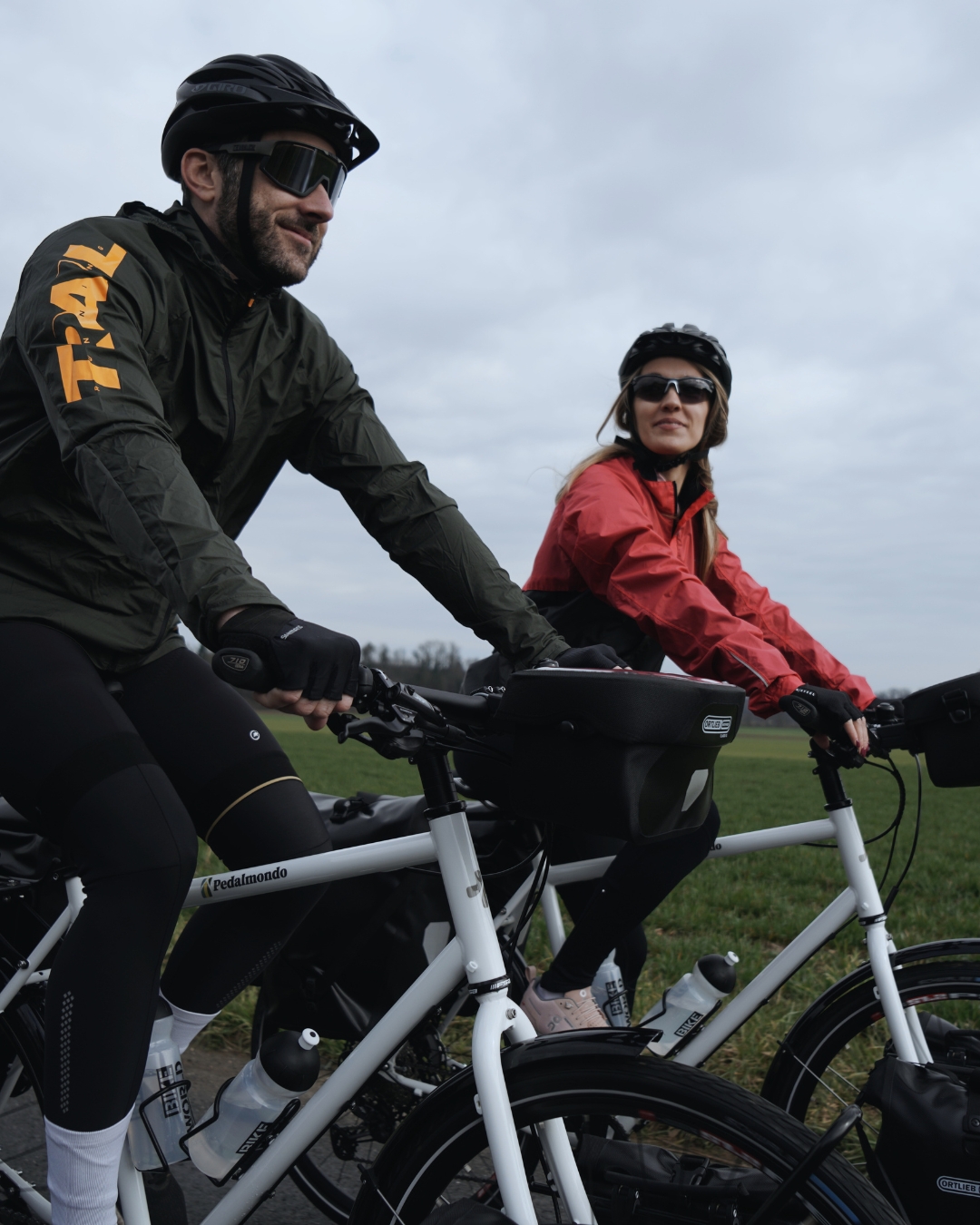
Bikepacking and multi-day bike tours are winning over more and more people. The appeal lies in combining independence, time in nature, exercise and travel all at once. But anyone planning a longer tour for the first time faces plenty of questions: what gear do you really need? How do I pick a suitable route? How much preparation does it take? The following guide shows you step by step how to plan and pull off your first trip successfully.
Preparation
Realistic stage planning
One key piece of advice for beginners: „Start small and do not overdo it.“
For your first tour, plan 2–3 days with daily stages of around 40–60 km and pick areas with moderate elevation gain. That way you get to know your equipment and can gauge what you are capable of – smaller challenges make for a positive experience without pushing you too hard.
Test your setup
Another important point is to test your fully loaded bike before the tour. A practice ride with the bike packed reveals weak points early on, for example bags rubbing or fixings coming loose. That lets you make adjustments before the trip itself and avoid unexpected problems.
Packing strategy and minimalism
The blog stresses the „less is more“ principle: under the motto „as light and smart as possible“, cutting weight not only improves how the bike rides, it also gives you a better overview and more enjoyment along the way.
Five principles for minimalist packing:
- Plan your tour and pack accordingly: weather, stage length and where you sleep determine what you actually need.
- Favour multi-purpose items: a buff can serve as a hat, headband or neck warmer, for instance.
- Less clothing, but in layers: layering saves space and gives you more flexibility.
- Do a test pack before you leave: you will quickly notice what is surplus.
- Pack smart rather than pack full: deliberately leave some space free – it makes stowing things on the go much easier.
A practical trick: lay out everything you want to take, then put 30% of it back – many beginners are surprised how little they actually need.
Route planning and navigation
Choosing a route
When choosing a route, length is not the only thing that matters – so do safety, signposting, places to resupply and the scenery. Find out early where the fountains, shops and places to stay along the route are, so you avoid unpleasant surprises.
Planning digitally with tools
Use route planners such as the SchweizMobil app to set your daily stages to suit your own needs. The platform offers clear maps with cycle routes, gradient data and other useful information.
Offline navigation
In rural regions or alpine areas in particular, there may be no mobile signal. Download routes and maps offline to a GPS device or your smartphone so you can navigate without a network.
Gear
Packing strategy – focus on the essentials
Less weight does not mean less comfort. Choosing deliberately saves space and makes for a more relaxed ride – especially on steep climbs or gravel tracks.
Tools and repair kit
A well-stocked repair kit is essential, even if you service your bike regularly. Spare tubes, patches, a multitool and a pump will get you through breakdowns on the road.
The blog also recommends cable ties and gaffer tape for makeshift repairs – small helpers that are enormously useful in an emergency.
Clothing – the layering principle
Go for functional clothing based on the layering principle: several thin, technical layers are more flexible and easier to combine than lots of individual garments.
Accommodation
Comparing the options
Where you sleep has a considerable effect on comfort and planning. Switzerland offers several options depending on what you prefer:
Tent: maximum flexibility, but less comfortable in the rain or where there are no washing facilities.
Inns and hotels: comfortable recovery after long stages, with a shower and often a secure place to park your bike.
Bike-friendly youth hostels: the Swiss youth hostel network, with around 50 locations, often offers bike shelters, washing facilities and breakfast – particularly comfortable for bikepackers.
Wild camping – freedom with responsibility
Wild camping is not banned outright, but it is restricted in many areas, particularly in nature reserves and alpine regions. Reading up thoroughly on local regulations and behaving respectfully are prerequisites.
Bike mechanics
Checking the bike before the tour
A carefully serviced bike is the basis for a worry-free tour. Before you set off, check:
- Brakes: they are your bike’s „life insurance“, especially on steep descents.
- Gears: a well-adjusted drivetrain makes riding easier as the terrain changes.
- Tyres: check the tread, look for cracks and keep an eye on pressure.
Basic repair skills
Even simple workshop skills such as changing a tube, lubricating the chain or retightening bolts give you confidence and independence on the road.
Weather and flexibility
Preparing for the weather
The weather can change quickly on bike trips, particularly in the Alps. A rain jacket and additional light layers are standard kit, even when the forecast is settled. Tools such as the MeteoSwiss app give reliable updates and help you decide whether a break or a change of route makes sense.
Diversions and route changes
Roadworks, closures or natural events can change your planned route. Platforms such as SchweizMobil show official alternatives and make it easier to navigate flexibly without losing much time.
Nutrition and hydration
One section of the blog is devoted to eating on the road. Nutrition expert Tamara Wüthrich puts it neatly: „Think of your body like a bike: without fuel it does not go.“ Taking on easily available carbohydrates regularly, roughly every 60 to 90 minutes, keeps your energy levels and blood sugar stable – important for both physical and mental performance.
Time to enjoy it
The closing message in the blog is clear: stop when somewhere is beautiful, take photos, talk to people and focus on the experience – it is not just about the kilometres, but about the impressions and the moments.
Conclusion
Your first bikepacking trip or bike tour will go well if you:
- plan early and choose realistic stages
- test your setup and pack deliberately
- take the mechanical and navigational side into account
- stay flexible about weather and route changes
- keep safety and comfort in mind along the way
With these hands-on tips from the Pedalmondo blog you are well prepared to start and enjoy your first multi-day bike tour safely.