
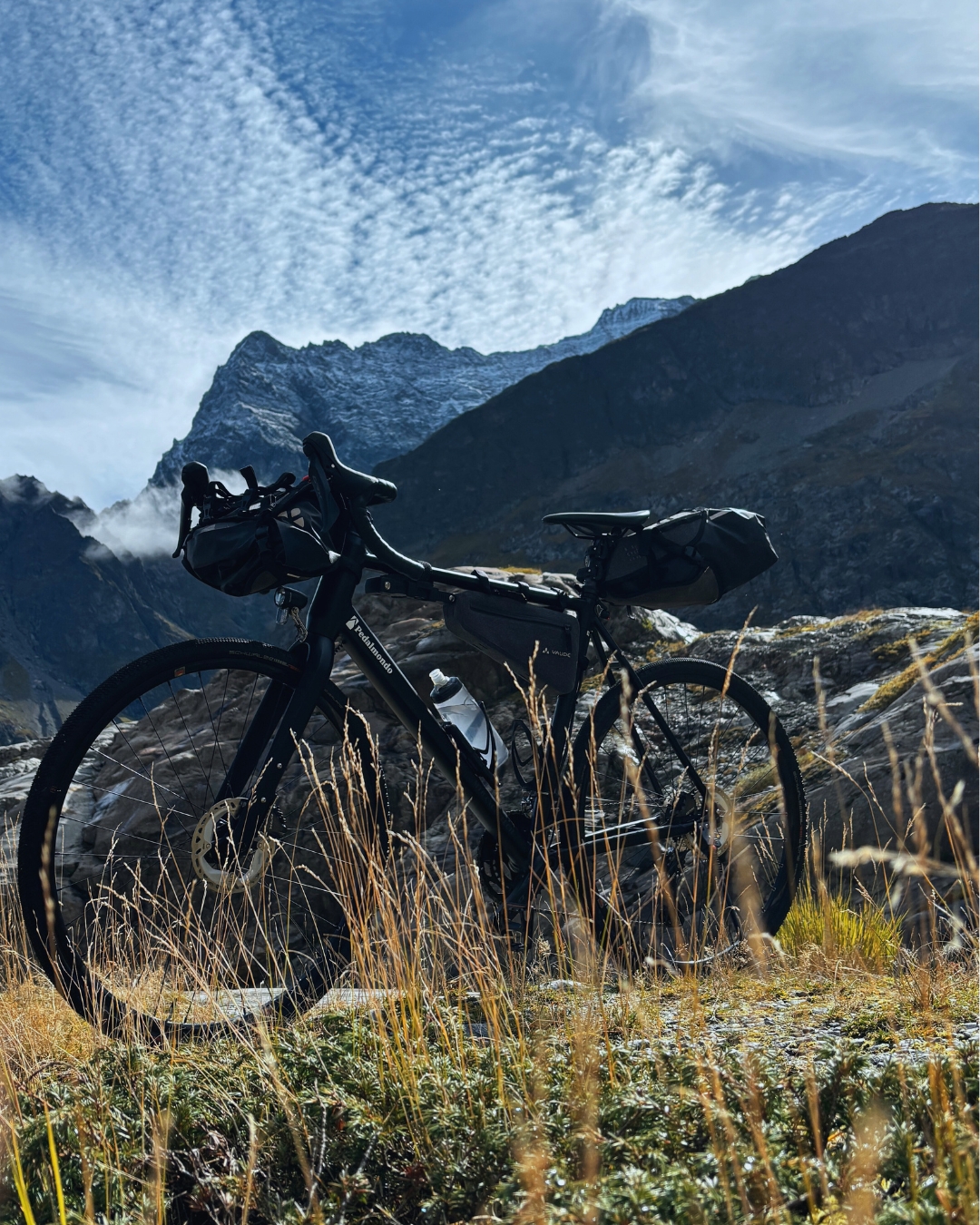
Bikepacking has become one of the most popular forms of bike travel in recent years. Instead of large racks and classic panniers, many cyclists today go for compact bikepacking bags that attach directly to the frame, saddle or handlebar. That keeps the bike light, agile and easy to control on gravel tracks and trails too.
But anyone buying a bikepacking bag for the first time quickly discovers the choice is huge. Different sizes, materials, mounting systems and price brackets do not always make the decision easy.
What should you look out for when buying a bikepacking bag?
In this guide we explain the most important factors – from waterproofing and robustness to visibility and compatibility with your bike. Once you know these criteria, picking the right bag for your bikepacking adventure gets a great deal easier.
What are bikepacking bags?
Bikepacking bags differ from classic panniers mainly in how they are built. Instead of being attached to a rack, they mount directly onto the bike frame.
Typical positions are:
- Saddle bags – behind the saddle
- Frame bags – inside the frame triangle
- Handlebar bags – at the front on the handlebar
- Top tube bags – on top of the frame
This setup distributes the weight evenly across the bike and improves how it handles, especially off road.
For multi-day tours, a combination of several bags is often used to spread the luggage out well.
The most important factors when buying a bikepacking bag
Several criteria come into play when buying a bikepacking bag. The following factors will help you judge quality, functionality and intended use more accurately.
1. Waterproofing
One of the most important factors is how watertight the bag is. When bikepacking you are often out for several days and cannot control the weather.
High-quality bikepacking bags are therefore:
- waterproof or highly water-repellent
- made from coated material
- fitted with welded seams
- equipped with waterproof zips
That keeps your luggage dry in rain, spray or mud. On longer tours in particular this is decisive, so that clothing, electronics or provisions stay protected.
Many manufacturers use materials such as:
- TPU-coated nylon
- PVC-coated fabrics
- Cordura fabric
These fabrics keep water out while also delivering high durability.
2. Robustness and durability
Bikepacking bags have to put up with a lot. On gravel or off-road routes in particular, strong vibrations and loads act on the material.
Good-quality bags should therefore:
- be abrasion-resistant
- have solid seams
- be made from hard-wearing fabrics
Materials such as ripstop nylon or Cordura are considered particularly durable and resistant to tears and abrasion.
A robust bag not only lasts longer, it also reliably protects your luggage from damage.
3. Weight of the bag
Every gram counts in bikepacking. On long tours or with a lot of climbing in particular, unnecessary weight can quickly become a problem.
A good bikepacking bag should therefore:
- be as light as possible
- still remain sturdy
- have no unnecessary extra parts
Modern materials allow a good balance between low weight and high stability.
Frame bags in particular have a strong influence on handling, as they sit right at the bike’s centre of gravity.
4. Mounting system
A solid mounting system is decisive for comfort and safety. If a bag wobbles or slips while you are riding, it can noticeably worsen how the bike handles.
Typical mounting methods are:
- hook-and-loop fasteners
- straps
- bolt-on mounting
- click systems
Most bikepacking bags use adjustable straps or hook-and-loop bands that adapt flexibly to different frame shapes.
What matters is that the bag:
- sits firmly
- does not knock against tyres or brake lines
- can be fitted and removed easily
5. Volume and capacity
The size of a bikepacking bag depends heavily on how long your tour is.
Typical volume ranges are:
| Type of bag | Volume |
|---|---|
| Top tube bag | 0.5 – 2 litres |
| Frame bag | 2 – 6 litres |
| Handlebar bag | 5 – 15 litres |
| Saddle bag | 8 – 16 litres |
A good internal layout makes packing easier and means important things are quick to reach.
While handlebar bags often take bulky items, frame bags are frequently used for heavier ones.
6. Stability while riding
A frequently underestimated factor is how stable the bag is while you ride.
Poorly designed bags can:
- sway
- wobble
- knock against the tyre
With large saddle bags in particular, stability is decisive. High-quality models therefore have:
- compression straps
- reinforced internal structures
- solid mounting systems
These stop the bag moving around while you are riding.
7. Compatibility with your bike
Not every bikepacking bag fits every bike. The frame shape plays a big part.
Important factors are:
- frame size
- tyre clearance
- brake and gear cables
- seatpost height
On small frames, for example, a large saddle bag may end up touching the rear wheel.
Modern components such as dropper posts can also cause problems if the bag blocks their range of movement.
So it is worth checking before you buy whether the bag suits your own bike.
8. Visibility and safety
Safety matters particularly on long tours or when riding at night. Good bikepacking bags therefore have reflective elements.
These make sure you are seen more easily in poor light.
Typical safety features are:
- reflectors
- reflective logos
- bright colours
Reflective elements considerably increase your visibility in traffic and reduce the risk of accidents.
9. Modularity and expandability
Many modern bikepacking bags are modular. That means they can be expanded flexibly.
Examples:
- additional mounting points
- modular strap systems
- add-on bags
Some systems use so-called harness constructions, where a holder stays on the bike and the dry bag simply slots in.
That makes it quick to swap luggage around or adapt it to different tours.
10. Aerodynamics
Aerodynamics play a role in bikepacking too. On long stretches or fast stages in particular, a badly positioned bag can create additional drag.
Frame bags have an advantage here, as they integrate neatly into the frame and create barely any extra resistance.
Handlebar or saddle bags, by contrast, can cause somewhat more wind resistance.
11. Value for money
The price of bikepacking bags can vary widely. Simple models start at around CHF 30–50, while high-quality bags can cost over CHF 150.
More expensive bags usually offer:
- better materials
- higher waterproofing
- more durable construction
- well-thought-out mounting systems
A good bikepacking bag should therefore strike a balanced relationship between price, quality and functionality.
What types of bikepacking bag are there?
In bikepacking, several bags are usually combined.
Typical setup variants are:
Saddle bag
The largest bag in the setup. It offers plenty of storage and attaches under the saddle.
Frame bag
Mounted in the frame triangle and particularly suited to heavy items.
Handlebar bag
Ideal for light, bulky gear.
Top tube bag
Perfect for snacks, your phone or tools.
Combining these bags makes for an even distribution of weight.
Conclusion: what to look out for when buying a bikepacking bag
The right bikepacking bag depends heavily on your bike, your tour and your personal requirements.
The most important factors when buying are:
- waterproofing
- robust materials
- low weight
- a solid mounting system
- the right size
- good compatibility with your bike
- reflective elements for safety
If you keep these criteria in mind, you will find a bag that stays with you on your bikepacking adventures for many years.
Because in the end one thing holds true: a good bikepacking bag is not just storage – it is a decisive part of every successful tour.