
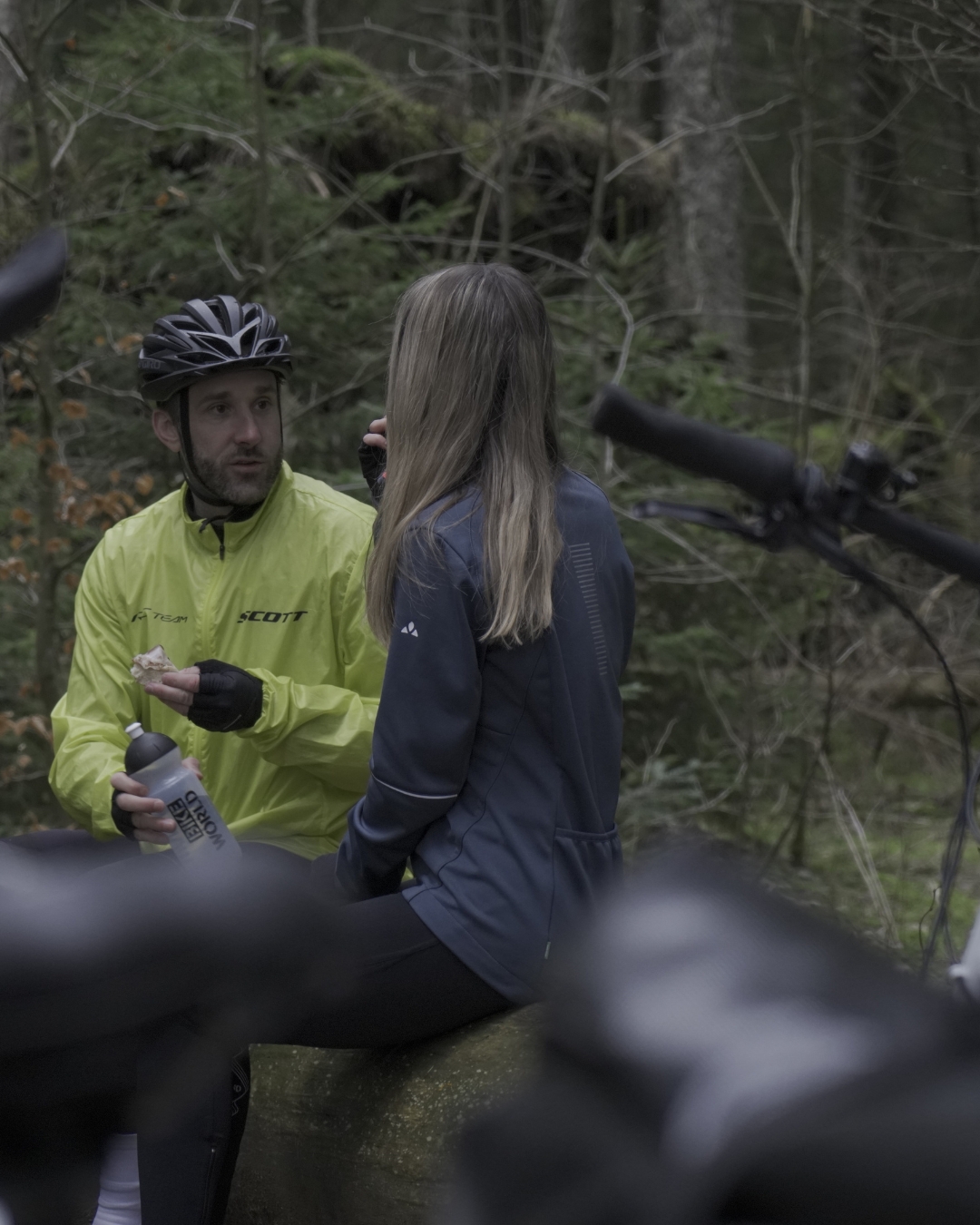
An interview with nutritionist Tamara Wüthrich
Whether it is an energy crash, digestive trouble or ravenous hunger – anyone spending several days on the bike knows the challenge: how do I fuel my body properly without much cooking or a real kitchen? We spoke to Swiss nutritionist Tamara Wüthrich. In this interview she explains why taking on energy regularly matters so much, how to avoid digestive problems – and why emotional eating on a trip is perfectly fine. We already touched on the topic in the „Beginner’s Guide“ blog post – here we go into more detail.
Tamara Wüthrich is a qualified nutritionist specialising in holistic wellbeing. On Instagram she posts as @vitaemin_taemi, sharing practical everyday tips on nutrition, mindfulness and digestive tolerance. Her philosophy: food should work for you, but it should also bring joy – and it should fit around your life, not the other way round. We asked her how to make that work on longer bike tours too.
„To me, eating well means balanced, practical and conscious.“
Tamara, your work focuses on holistic wellbeing. What does „eating well“ mean to you – especially when life is active?
To me, eating well means eating a varied, balanced diet – with complex carbohydrates, proteins and fats. On days with a lot of activity I go for fast-acting carbohydrates before training and a combination of carbohydrates and protein afterwards, to support recovery.
What motivates you to look at nutrition not just functionally, but emotionally too?
Because nutrition is highly individual. What works for one person may not suit another at all. I find it fascinating to work out with my clients what feels right for them personally. Nutrition is not a mass-market product – it has to fit your life.
Bikepacking & nutrition: „Hunger is stressful – and that affects your mental strength too.“
Bikepacking is physically demanding – but mentally too. How can nutrition help you stay steady?
Our blood sugar level has a direct effect on our mood. If we eat too little, the body produces stress hormones such as cortisol – and that can leave us mentally unstable. That is why it is so important on the road to take in smaller portions of carbohydrates regularly. Going hungry is counterproductive – both physically and psychologically.
A lot of people eat too much or too little on tour – how do you get back into balance?
Acceptance is the first step. If you have eaten too little, you can correct course quickly with small snacks such as bars or dried fruit. If you have eaten too much, only patience helps – that, and easing off the pace. Digestion is inhibited when you are working at full effort.
„Mindful eating is possible on tour too – with small rituals.“
You talk a lot about mindful eating. How does that work on the road, when you are tired or hungry?
Take time to eat, even on tour. A quick check-in – what can you taste? how do you feel? – can help. If you are very hungry, still try to eat slowly. A rule of thumb: chew every mouthful 30 times. And, very practically, rather eat cold leftovers from dinner at lunchtime than rush to prepare something hot under time pressure.
„Well chewed is half digested – especially under physical strain.“
Many people complain about digestive problems on tour. What are the most common causes?
Often it is hurried, inattentive eating. Digestion starts in the mouth – chewing is already the first step of digestion. If that is missing, the gut has a harder time of it. That matters particularly during physical exertion, because your body cannot concentrate on digesting and riding at the same time.
What do you recommend to fuel the body well on tour without overloading it?
Fast-acting carbohydrates make sense during the day – think white rice, pasta, white bread, dried fruit. In the evening, go for high-fibre, nutrient-dense foods – lentils, vegetables, wholegrain bread combined with healthy fats and proteins, for example. And above all: listen to your own hunger.
„Quick energy is good – but only at the right moment.“
Many people reach for sugar or energy bars. When does that make sense, and when not?
After 60–90 minutes of effort, the body’s muscle glycogen stores start running low. That is the point to top up carbohydrates – with a bar or dried fruit, for instance. But be careful with too much fructose at once – it can overwhelm the gut. Best to test beforehand what you tolerate well.
„Emotional eating is allowed – as long as it makes you feel good.“
What do you make of comfort eating or reward eating on tour?
Emotional eating is not inherently bad. Only when it comes with real distress is it worth looking behind the habit – possibly with professional support. Eating is more than just taking on nutrients.
And finally: what are your personal bikepacking essentials?
I love my homemade crackers and dates – I always have those with me. When it is cold, I make polenta in a thermal mug in the morning – it stays warm for ages! Plus a few hard-boiled eggs for protein. For me, warm food on the road is simply soul food.
More from Tamara Wüthrich
Want to find out more about Tamara, her recipes or her consultations? Then take a look: